The History of Tarot
Truth, Not Myth
From Renaissance card games to modern guidance tools, discover the real story of tarot—and why it's been misunderstood for centuries.
1440s - 1700s
The Origins of Tarot
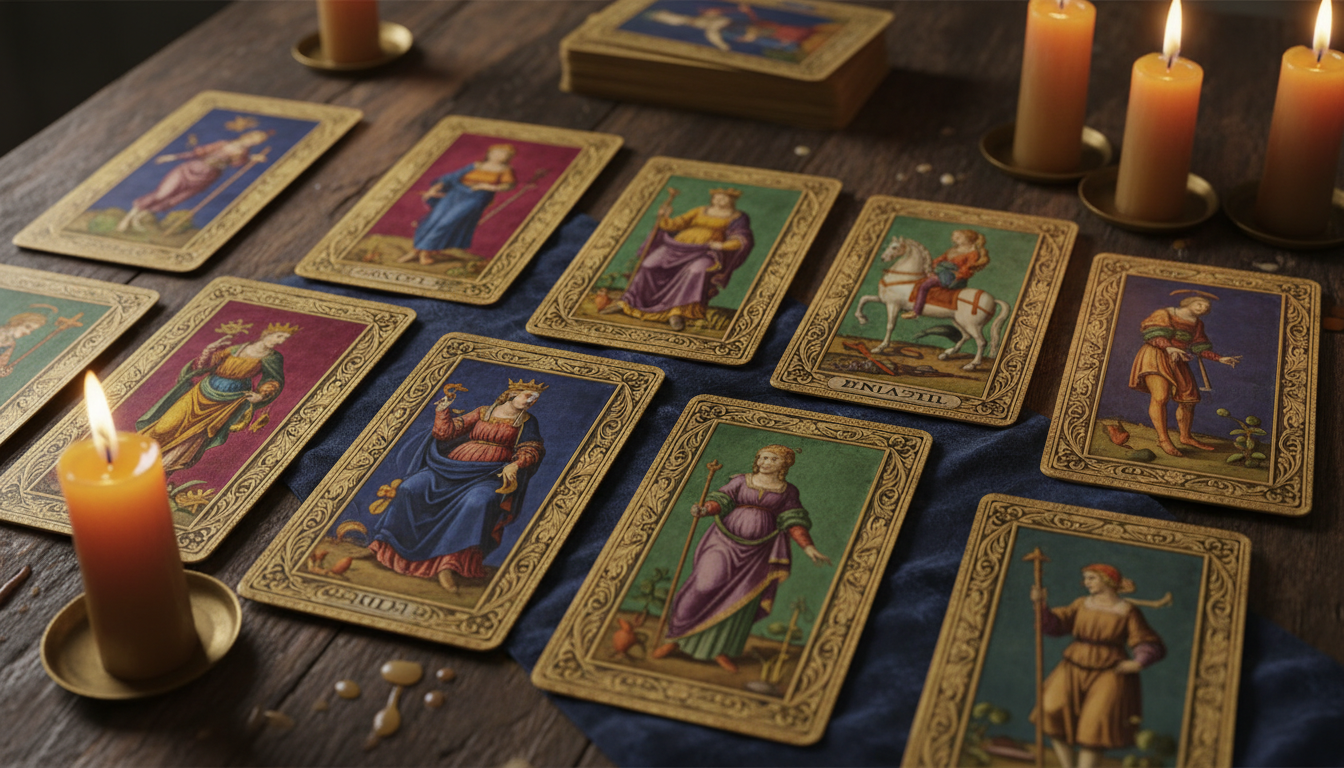
Contrary to popular myth, tarot cards were not created by ancient Egyptians, mystics, or secret societies. The truth is more humble—and fascinating. Tarot began in 15th-century northern Italy as a card game called tarocchi, played by nobility for entertainment.
The First Tarot Decks
The earliest known tarot cards date to around 1440 in Milan, Ferrara, and Bologna. These hand-painted luxury decks were commissioned by wealthy families like the Visconti and Sforza. They featured the 22 "triumph" cards (now called Major Arcana) as trump cards added to the standard 56-card playing deck.
Key Historical Facts
- •The word "tarot" comes from the Italian tarocchi—the name of the card game
- •Original tarot had nothing to do with fortune-telling—it was purely for gaming
- •The imagery drew from Christian symbolism, classical mythology, and court life
- •Early decks were expensive hand-painted artworks, not mass-produced cards
The Structure of the Tarot
A traditional tarot deck contains 78 cards divided into two groups:
Major Arcana (22 cards)
The "greater secrets"—archetypal images like The Fool, The Magician, Death, The Tower, and The World. These represent major life themes and spiritual lessons.
Minor Arcana (56 cards)
Four suits (Cups, Pentacles, Swords, Wands) with cards Ace through 10, plus four court cards. These relate to everyday situations and emotions.
1780s - 1900s
From Games to Guidance
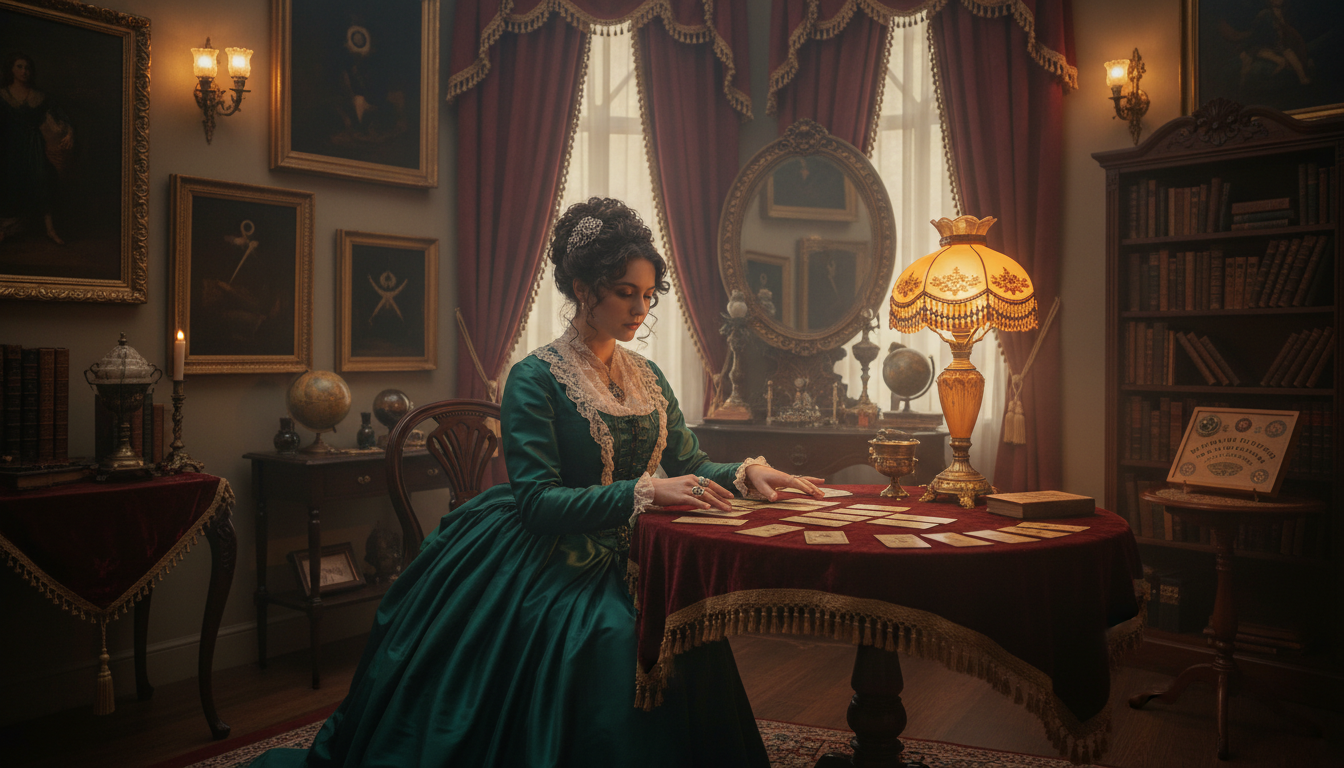
For over 300 years, tarot remained primarily a card game. It wasn't until the late 18th century that tarot became associated with divination and mysticism—a transformation that happened in France, not ancient Egypt.
The French Occultists
In 1781, a Swiss clergyman named Antoine Court de Gébelin published a theory (without evidence) that tarot came from ancient Egypt and contained hidden wisdom. Though historically inaccurate, his ideas captured the imagination of French occultists and sparked tarot's transformation into a spiritual tool.
By the Victorian era, tarot had been fully embraced by the spiritualist movement. Secret societies like the Hermetic Order of the Golden Dawn developed elaborate systems connecting tarot to astrology, Kabbalah, and other esoteric traditions.
The Rider-Waite Revolution
In 1909, artist Pamela Colman Smith and occultist A.E. Waite created the Rider-Waite-Smith deck—the first to include illustrated scenes on all 78 cards, not just the Major Arcana. This made tarot accessible to everyone, not just initiates of secret societies.
The Rider-Waite imagery became so influential that most modern decks are based on it. Its clear symbolism opened tarot to the general public and transformed it from an obscure occult practice into the widely-used guidance tool we know today.
Understanding the Practice
How Tarot Actually Works
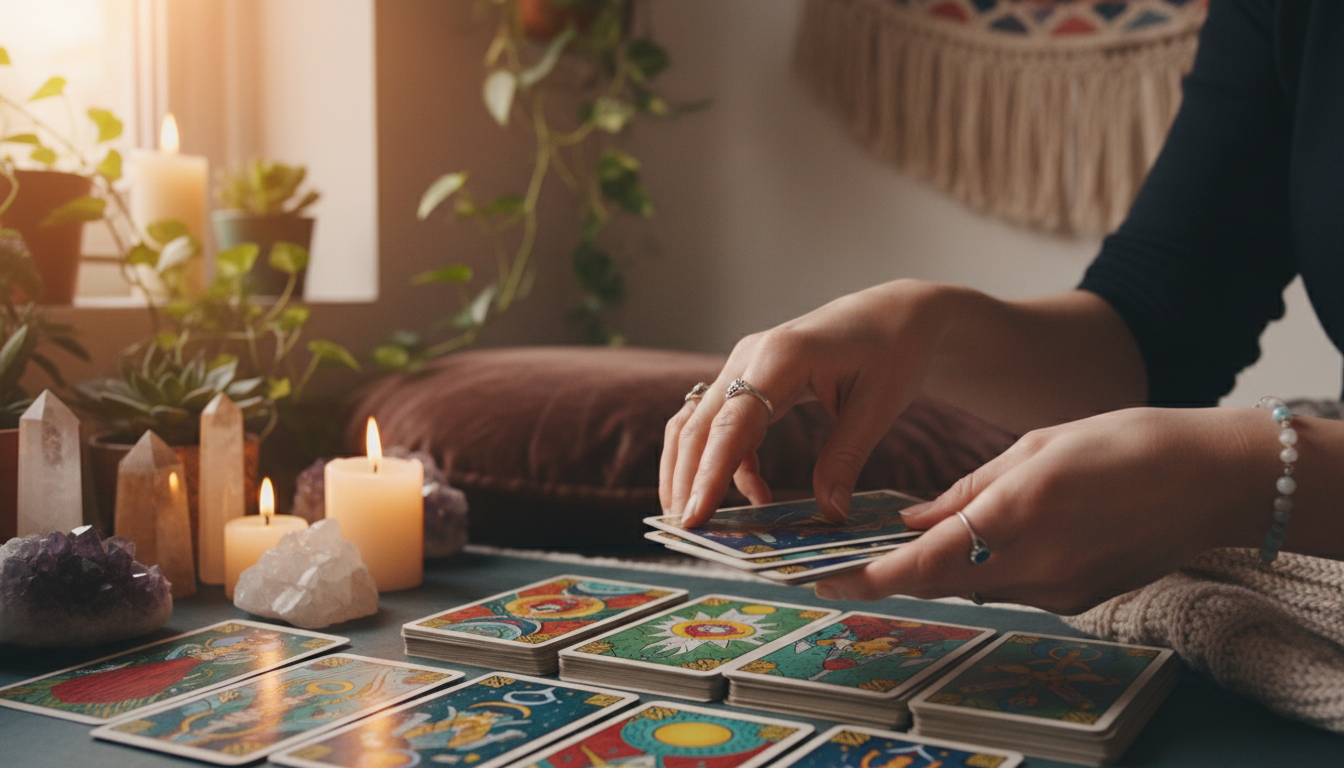
Tarot doesn't predict a fixed future—that's not how it works. Instead, tarot is a powerful tool for reflection, insight, and decision-making. Here's what actually happens during a reading:
Focus Your Question
The querent (person receiving the reading) focuses on a question or situation. This mental focus is key—it's not about predicting random events.
Draw & Interpret
Cards are drawn and placed in a spread (pattern). The reader interprets the symbolism in relation to the question, drawing on traditional meanings and intuition.
Reflect & Apply
The reading offers perspectives, possibilities, and things to consider—not commands or fixed predictions. You retain free will and choice.
Why Does Tarot Feel Accurate?
Many people find tarot readings surprisingly relevant. Several factors contribute to this:
Archetypal Imagery
Tarot cards depict universal human experiences—love, loss, change, triumph, fear. Everyone can find relevance in these themes.
Focused Reflection
The reading process itself—pausing, focusing, reflecting—helps you clarify thoughts you may not have consciously examined.
Pattern Recognition
Our minds naturally find patterns and meaning. Tarot provides a framework for organizing intuitions and observations.
Intuitive Connection
Many believe tarot connects to intuition, the subconscious, or spiritual guidance—helping access wisdom beyond conscious thought.
Tarot & Crystals Together
Many practitioners enhance their tarot practice with crystals. Amethyst is popular for enhancing intuition, while Clear Quartz amplifies clarity. Black Tourmaline provides grounding before readings, and Labradorite is treasured for its connection to mysticism and transformation.
Clearing Up Misconceptions
Tarot Is Not Evil
One of the most persistent myths about tarot is that it's somehow evil, demonic, or spiritually dangerous. This misconception stems from misunderstanding, fear of the unfamiliar, and centuries of exaggerated portrayals in popular culture. Let's address the facts.
The Historical Truth
Tarot cards were invented by Christian Europeans in Renaissance Italy. The imagery includes Christian symbols—angels, virtues, and Biblical references. The Papess (High Priestess), Pope (Hierophant), and Judgment card featuring resurrection are all drawn from Catholic tradition.
Common Myths vs. Reality
Myth
Tarot summons evil spirits
Reality
Tarot cards are simply paper with images—they don't summon anything. They're a tool for reflection, like a journal or meditation.
Myth
The Death card means literal death
Reality
The Death card represents transformation, endings, and new beginnings. Experienced readers know it's often one of the most positive cards to receive.
Myth
Tarot comes from dark occult sources
Reality
Tarot originated as an Italian card game. Its use for divination developed 300 years later in 18th-century France among intellectuals and philosophers.
Myth
Only 'psychics' should use tarot
Reality
Anyone can learn tarot. It's a skill combining symbolism interpretation, intuition, and active listening—not supernatural powers.
What Tarot Actually Is
At its core, tarot is a tool for self-reflection and personal growth. Think of it like a structured way to examine your thoughts, feelings, and options. The cards provide a mirror—the meaning comes from your own reflection.
Self-Discovery
Explore your inner thoughts, fears, and desires in a structured way.
Decision Support
Gain new perspectives when facing difficult choices or crossroads.
Spiritual Practice
Connect with intuition and inner wisdom in a mindful practice.
Respecting All Beliefs
We understand that some religious traditions advise against divination practices, and we respect everyone's beliefs. Our view is simple: for those who choose to use tarot, it can be a meaningful tool for reflection and personal growth—much like journaling, meditation, or any other contemplative practice.
Tarot doesn't require belief in anything supernatural to be useful. Many people approach it purely as a psychological tool—a way to access subconscious thoughts through symbolism. Others see it as a spiritual practice. Either approach is valid.
Discover More at Dragon Traditions
Explore our collection of crystals and learn about their meanings, history, and how they can enhance your spiritual practice.