Rocks vs CrystalsUnderstanding the Difference
One of the most common questions beginners ask: "What's the difference between a rock and a crystal?" Understanding these terms will help you choose the right pieces for your collection and spiritual practice.
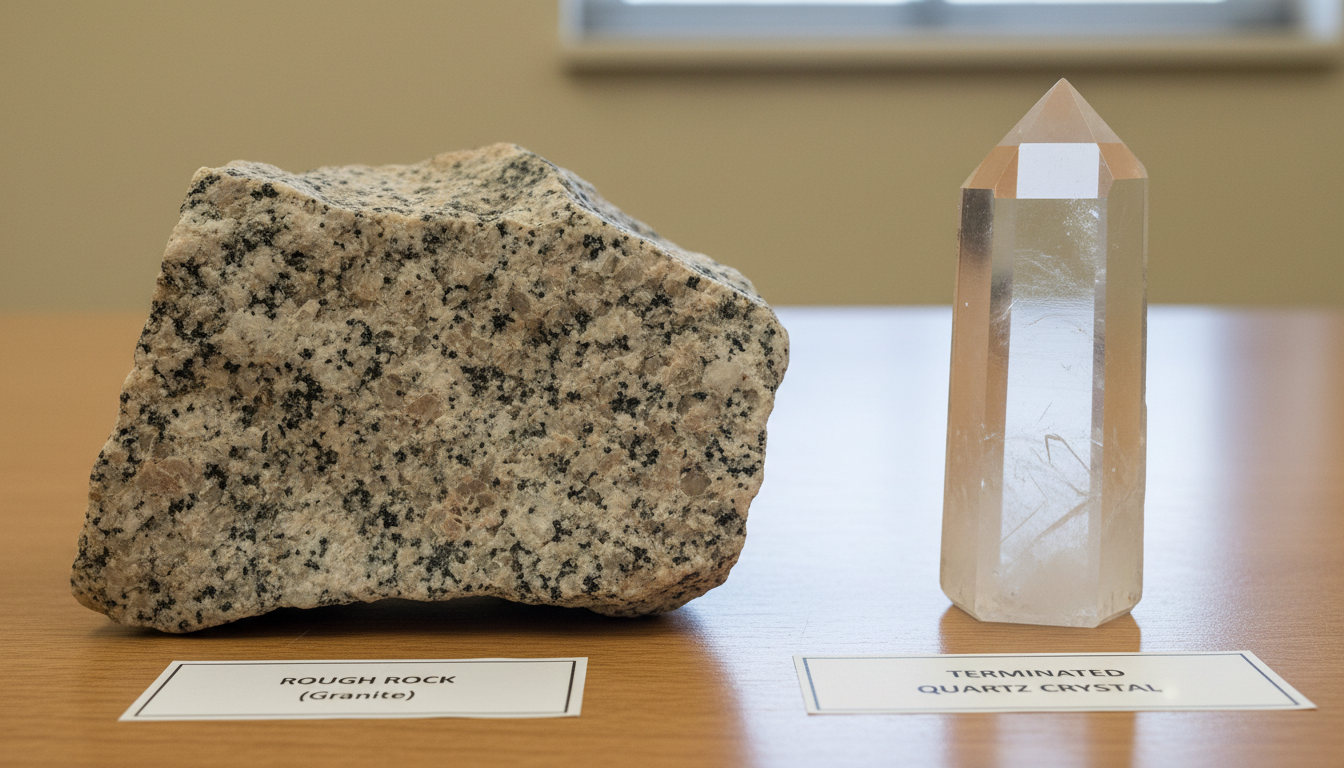
Left: Granite (a rock made of multiple minerals) | Right: Clear Quartz Crystal (organized atomic structure)
The Quick Answer
Rocks
A mixture of different minerals mashed together. No organized internal structure. Think of it like a trail mix - different ingredients combined.
Crystals
A mineral with atoms arranged in a perfect, repeating 3D pattern. This organized structure creates those beautiful geometric shapes and facets.
The Complete Guide
Here's what each term actually means - from rocks to gemstones and everything in between.
Rock
A solid mass made up of two or more minerals mixed together. Rocks don't have a specific chemical formula or organized internal structure.
Examples
- Granite (quartz + feldspar + mica)
- Sandstone (compressed sand grains)
- Basalt (volcanic rock)
- Marble (metamorphosed limestone)
Metaphysical Note
Less commonly used in crystal healing because their mixed composition creates diffused energy rather than focused vibrations.
Mineral
A naturally occurring, inorganic solid with a specific chemical composition and organized atomic structure. Minerals are the building blocks of rocks.
Examples
- Quartz (SiO₂)
- Feldspar
- Calcite
- Pyrite (FeS₂)
- Mica
Metaphysical Note
Many minerals form crystals and carry specific energetic properties based on their chemical makeup.
Crystal
A mineral (or sometimes organic material) with atoms arranged in a highly organized, repeating three-dimensional pattern. This internal structure creates the flat faces, sharp edges, and geometric shapes we recognize.
Examples
- Clear Quartz points
- Amethyst clusters
- Citrine
- Fluorite cubes
- Selenite wands
Metaphysical Note
Crystals' organized atomic structure is believed to create stable energy frequencies, making them powerful tools for healing and meditation.
Gemstone
A mineral crystal (or organic material) that is beautiful, durable, and rare enough to be cut and polished for jewelry. Not all crystals qualify as gemstones.
Examples
- Diamond
- Ruby
- Sapphire
- Emerald
- Amethyst
- Opal
Metaphysical Note
Gemstones carry crystal energy plus the additional intention and craftsmanship of being shaped for personal wear.
Specimen
A sample of a mineral, crystal, or rock in its natural form, typically preserved for display or collection rather than being cut or polished.
Examples
- Museum-quality clusters
- Natural points
- Geode halves
- Matrix pieces (crystals on their host rock)
Metaphysical Note
Natural specimens retain their original energy and formation patterns, often considered more powerful than heavily processed pieces.
Why Crystal Structure Matters
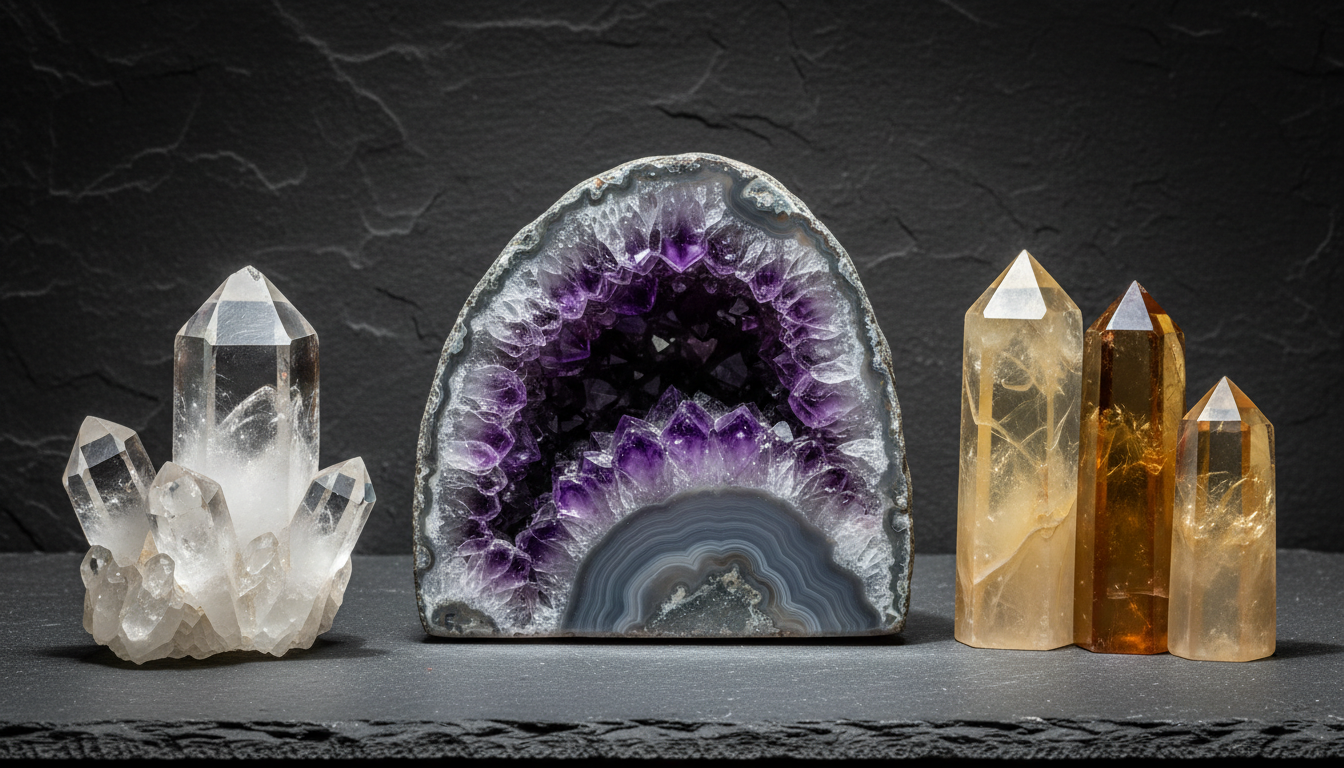
Notice the geometric shapes, flat faces, and natural termination points. These aren't carved - they form naturally because the atoms inside are arranged in perfect, repeating patterns. This organized structure is what makes crystals special for energy work.
Why Does This Matter?
Understanding the difference isn't just academic - it affects your crystal practice.
Energy & Vibration
Crystals' organized atomic structure creates consistent, stable vibrations. Rocks, with their mixed composition, have more scattered energy signatures.
Metaphysical Properties
Each crystal type has specific properties based on its unique chemical composition and structure. Clear quartz amplifies, amethyst calms, rose quartz opens the heart.
Quality & Value
Understanding the difference helps you identify quality pieces and fair prices. A genuine crystal specimen is typically worth more than a random rock.
Authentic Connection
When you understand what you're working with, you can form a deeper, more intentional relationship with your crystals.
Raw vs Tumbled vs Specimen
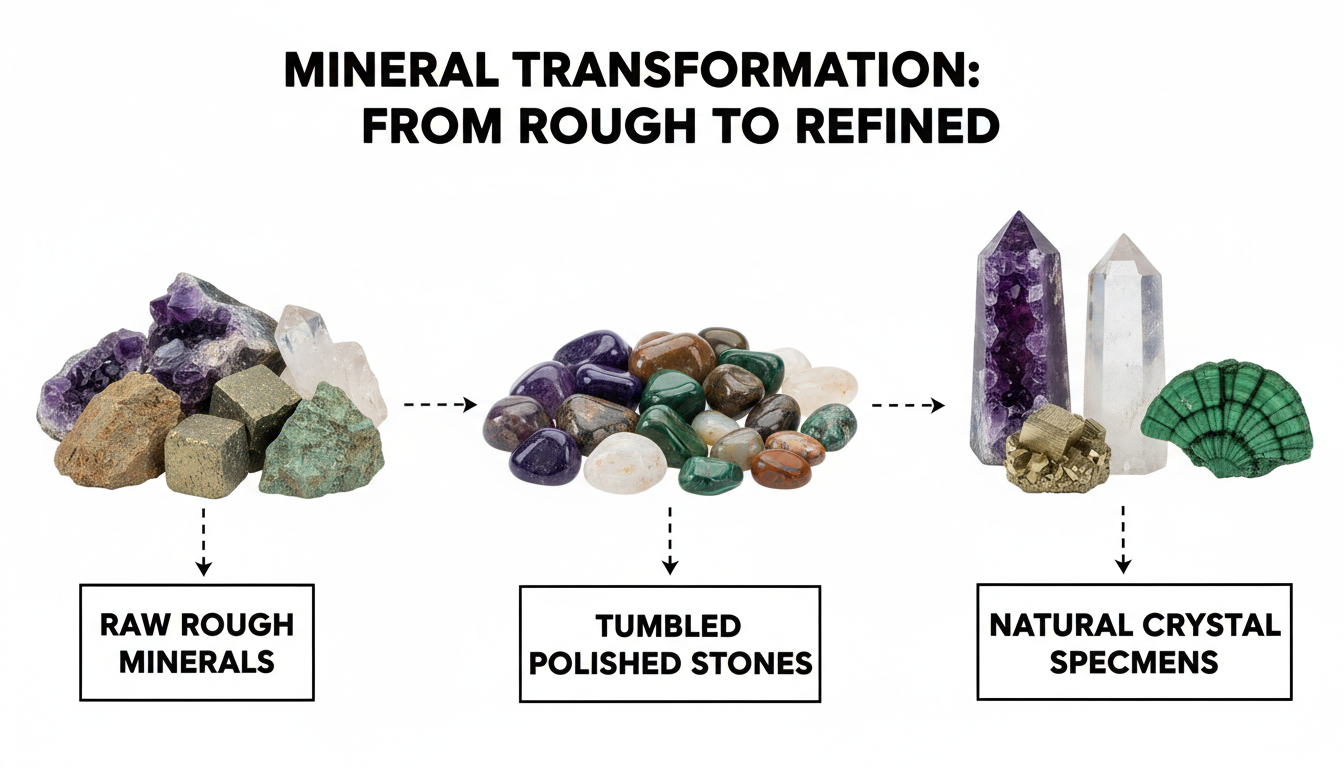
Raw / Rough
Crystals in their natural state, exactly as they came from the earth. May have matrix (host rock) attached.
Believed to carry the purest, most unaltered energy.
Tumbled / Polished
Crystals that have been polished smooth in a rock tumbler. The internal crystal structure remains unchanged.
Great for carrying, gentle energy, and beginners.
Specimen / Display
High-quality pieces selected for their natural beauty, crystal formation, or unique characteristics.
Collector pieces, often museum-quality.
Common Questions
The questions we hear most often about rocks vs crystals.
Is quartz a rock or a crystal?
Quartz is a mineral that typically forms crystals. When you see a clear quartz point with geometric facets, that's a crystal. However, quartz is also a component found in many rocks like granite.
Is amethyst a rock?
No! Amethyst is a purple variety of quartz crystal. The purple color comes from iron impurities and natural irradiation. Amethyst geodes form inside volcanic rocks, but the amethyst itself is a crystal.
What about obsidian?
Obsidian is actually volcanic glass, not a true crystal. It forms when lava cools so quickly that atoms don't have time to organize into a crystal structure. It's technically classified as a rock or mineraloid.
Is a geode a rock or crystal?
Both! The outer shell of a geode is rock (usually volcanic or sedite), while the beautiful crystals inside (often quartz or amethyst) are true crystals that grew over millions of years.
What's the difference between raw and tumbled crystals?
Raw crystals are in their natural form as they came from the earth. Tumbled stones have been polished smooth in a rock tumbler. Both are still crystals - tumbling doesn't change the internal atomic structure.
What Makes a Rock Different
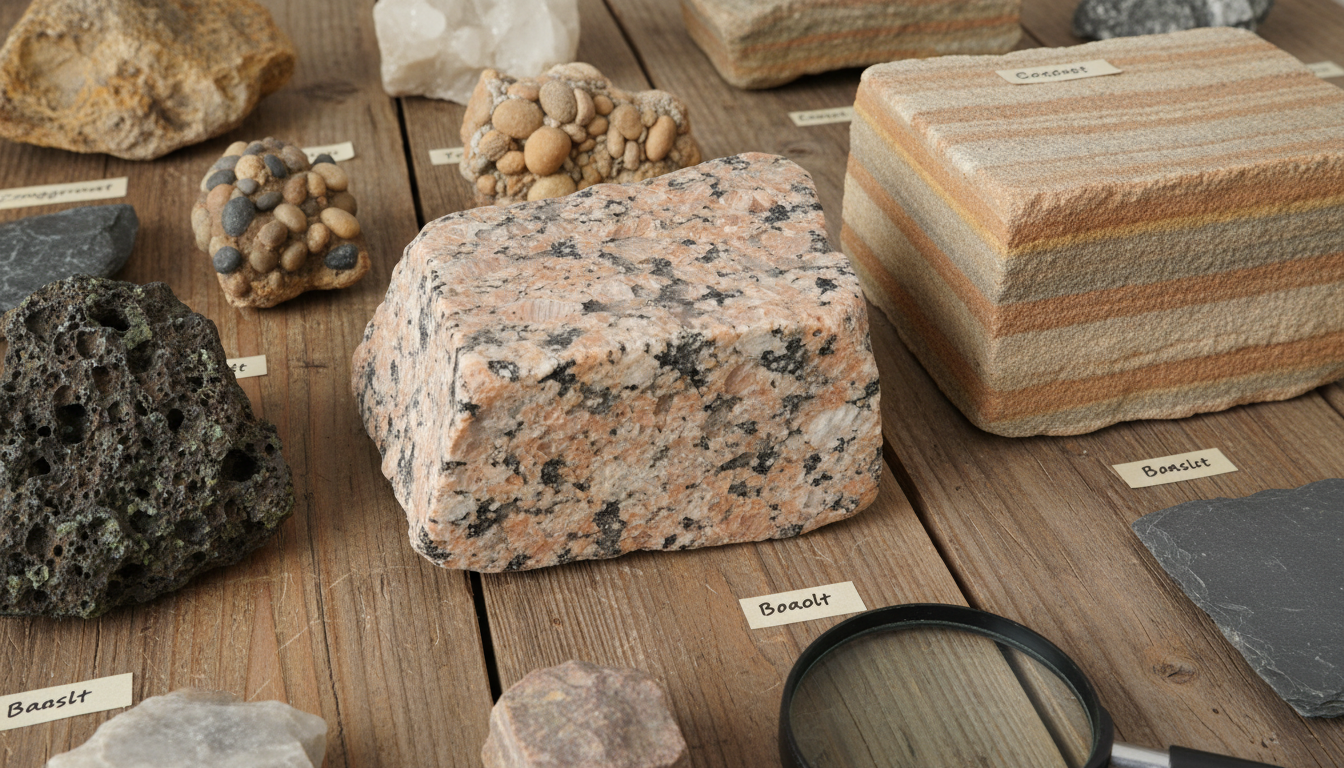
Notice how rocks like granite have a speckled appearance - that's because you're seeing multiple different minerals (quartz, feldspar, mica) all mixed together. There's no single organized structure, just a jumble of different materials.
See Real Crystals & Specimens In Person
The best way to understand the difference is to hold them in your hands. Visit our showroom inside Oakland Mall to see over 1,000 crystals, specimens, and yes - even some beautiful rocks!
Call Us