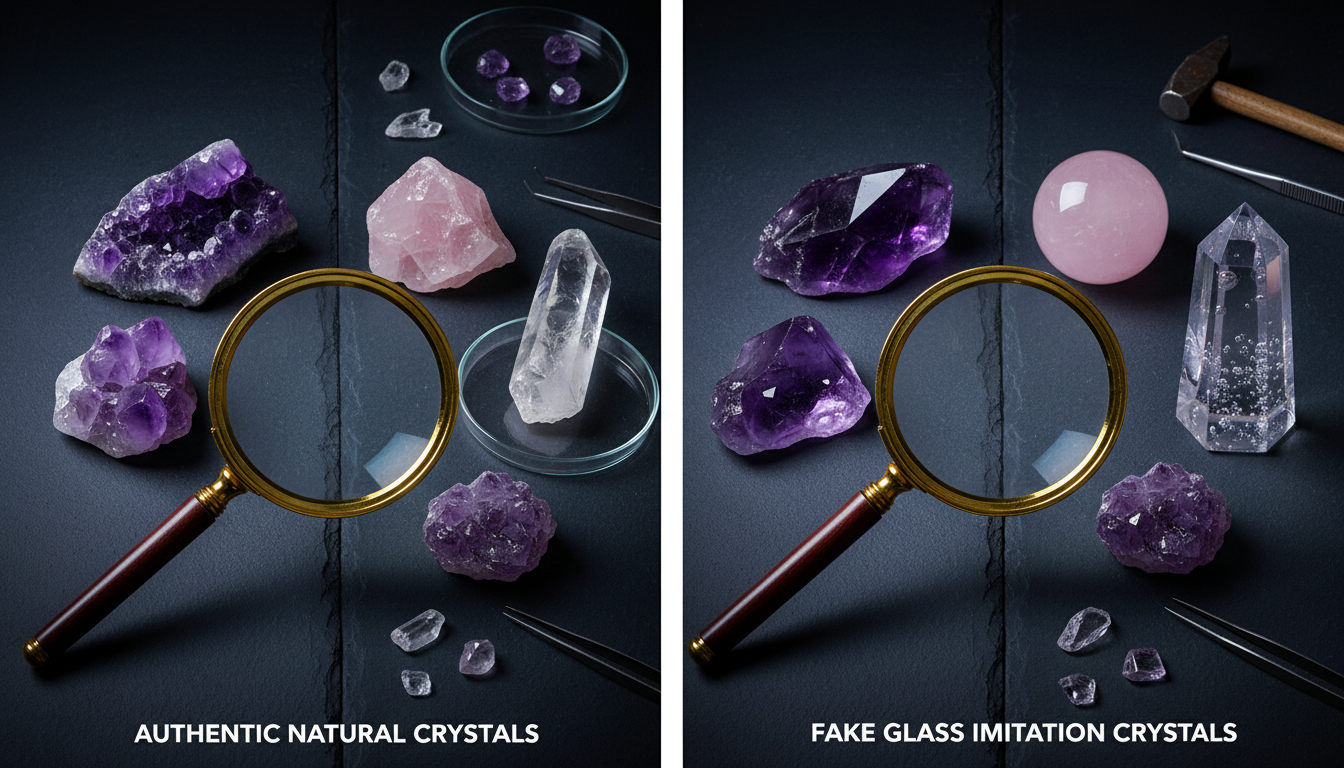
Real vs Fake Crystals
Learn how to identify authentic crystals and protect yourself from counterfeits. Expert tips for spotting fakes, dyed stones, and glass imitations.
Why Authenticity Matters
The crystal market is flooded with fakes, synthetics, and treated stones sold as natural. Some estimates suggest up to 50% of crystals sold online are misrepresented in some way.
Beyond the financial aspect, if you're using crystals for energy work or healing, you want the real thing. Glass and plastic don't carry the same energetic properties as stones formed over millions of years in the earth.
How to Test Crystal Authenticity
Use these simple tests at home to verify if your crystals are genuine.
Temperature Test
Real crystals feel cold to the touch and stay cool even when held. Glass and plastic warm up quickly from body heat.
Weight Test
Natural crystals are denser than glass or plastic. A real crystal will feel heavier than you expect for its size.
Hardness Test
Real quartz (7 on Mohs scale) can scratch glass. If your "quartz" gets scratched by glass, it's likely fake.
Magnification Test
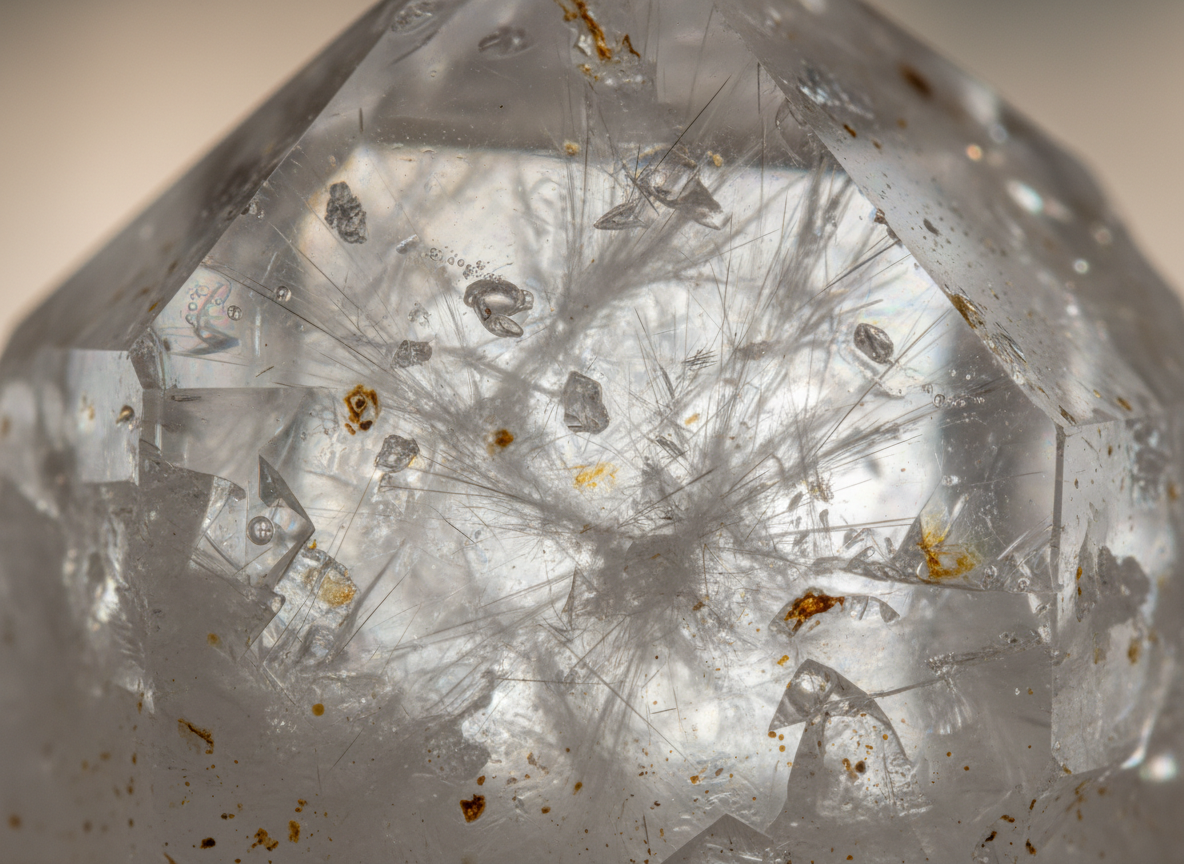
Under magnification, real crystals show natural inclusions, fractures, and color variations. Fakes look too perfect or have uniform bubbles.
Light Test
Hold the crystal to light. Natural crystals have irregular light patterns and inclusions. Glass shows uniform clarity or round bubbles.
Price Test
If the price seems too good to be true, it probably is. Genuine moldavite, larimar, and alexandrite are never cheap.
What to Look For
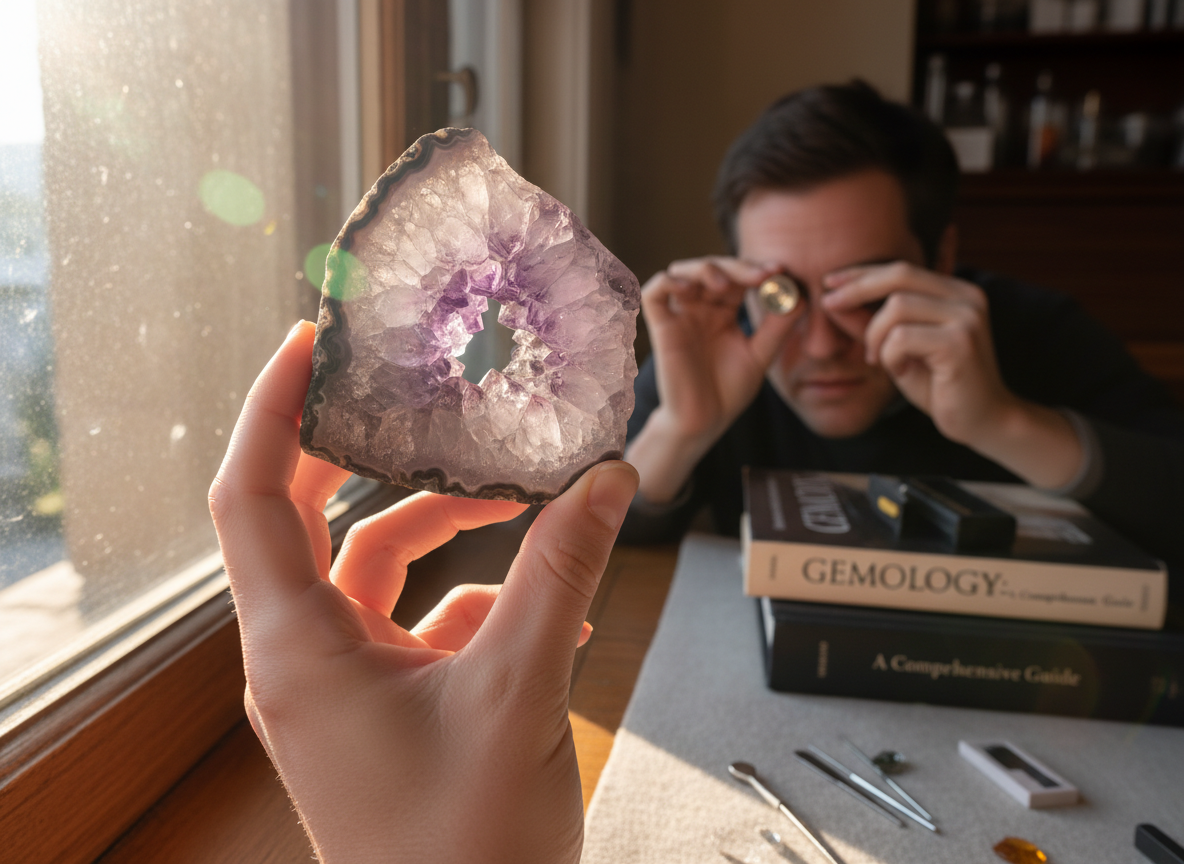
Natural crystals are imperfect—that's what makes them beautiful and unique. Look for:
- Internal veils, rainbows, and inclusions
- Color zoning and natural variations
- Natural surface textures and growth patterns
- Weight appropriate for the crystal type
Red Flags to Avoid
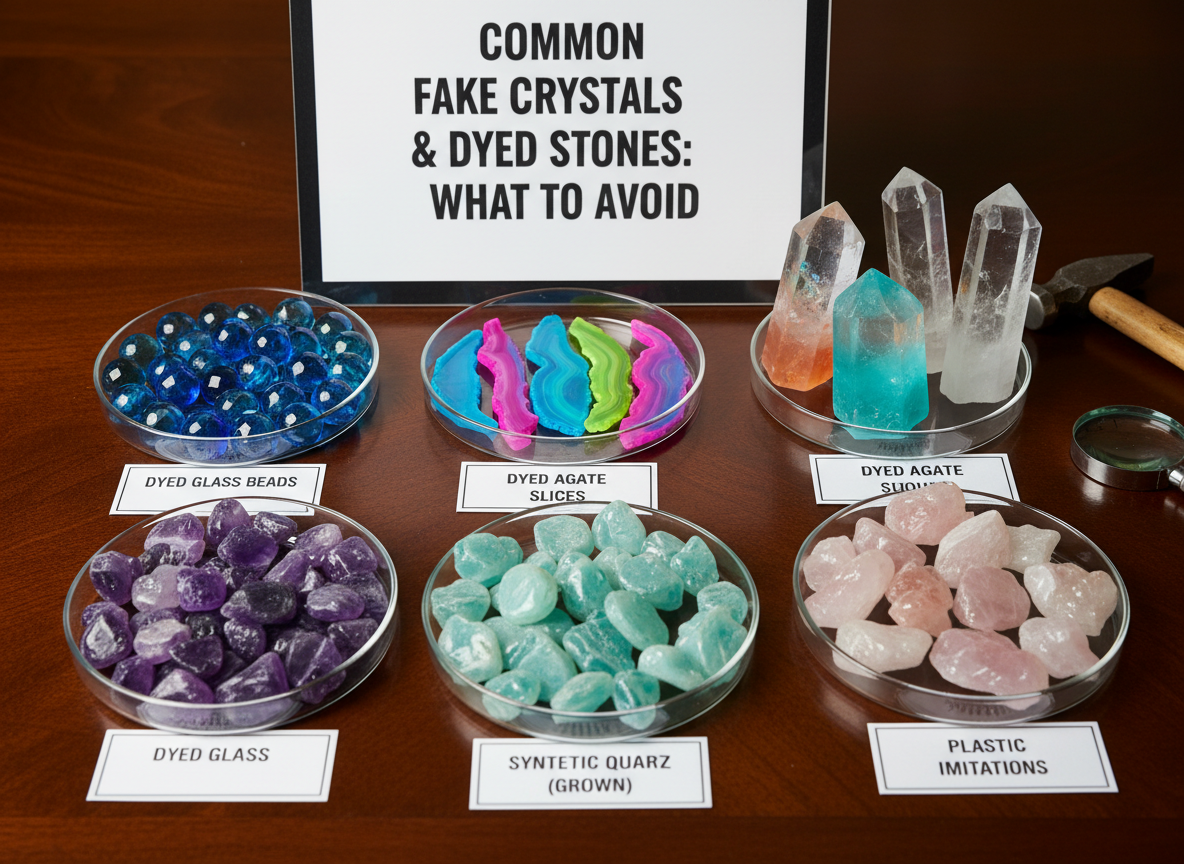
These warning signs often indicate fake, synthetic, or misrepresented crystals:
- Round air bubbles inside (glass indicator)
- Too-perfect uniform coloring throughout
- Unnaturally bright or neon colors
- Suspiciously low prices for rare stones
Most Commonly Faked Crystals
These popular crystals are frequently counterfeited. Here's how to spot the fakes.
Real
Natural citrine is pale yellow to smoky golden, often with slight color variations throughout.
Fake
Most "citrine" sold is heat-treated amethyst with bright orange/burnt tips and white bases.
How to Tell
Real citrine has even, pale coloring. Heat-treated shows harsh orange with visible white at the base.
Real
Natural turquoise has a waxy luster with natural matrix patterns (brown/black veining).
Fake
Howlite dyed blue or reconstituted turquoise powder pressed into shapes.
How to Tell
Scratch test in hidden area—dye comes off. Real turquoise has irregular matrix, not perfect patterns.
Real
Natural moldavite has a wrinkled, pitted texture and mossy green color with internal bubbles.
Fake
Green glass made to look like moldavite. Often too shiny and uniform.
How to Tell
Real moldavite is expensive ($15-50+ per gram), has irregular surface texture, and internal bubbles visible under light.
Real
Real malachite has distinctive concentric banding patterns that are never perfectly uniform.
Fake
Dyed or reconstituted material with overly perfect, repetitive patterns.
How to Tell
Natural malachite bands vary in thickness and shade. Fakes have mechanical-looking repetitive patterns.
Real
Real lapis has golden pyrite flecks and white calcite inclusions scattered naturally.
Fake
Dyed howlite or jasper, sometimes with fake gold flecks painted on.
How to Tell
Real pyrite in lapis is metallic and dimensional. Fake gold flecks look flat or painted.
Real
Natural clear quartz has inclusions, veils, rainbows, and slight cloudiness in areas.
Fake
Glass spheres and points sold as quartz. Too perfect and clear throughout.
How to Tell
Real quartz has internal features and stays cold. Glass warms quickly and may have round bubbles.
Red Flags Checklist
- Unusually low prices for rare crystals
- Perfect, uniform coloring with no variations
- Round air bubbles visible inside (indicates glass)
- Bright, unnatural colors (especially neon)
- Dye residue or color that rubs off
- Seams or mold lines on the surface
- Seller cannot provide origin information
- Stock photos instead of actual product photos
Signs of Authenticity
- Natural inclusions, fractures, and imperfections
- Color variations and zones within the stone
- Appropriate weight for the crystal type
- Cool temperature that persists when held
- Seller provides sourcing information
- Price aligns with market value for that crystal
- Unique characteristics—no two pieces identical
- Appropriate hardness for the crystal type
Treated vs Fake: Understanding the Difference
Treated Crystals (Acceptable)
Many crystals undergo treatments that are industry-standard and don't diminish their value:
- • Heat treatment - enhances color (common in citrine, tanzanite)
- • Irradiation - deepens color (smoky quartz)
- • Stabilization - strengthens fragile stones (turquoise)
Fake Crystals (Unacceptable)
These are misrepresentations that should be disclosed or avoided:
- • Glass - man-made glass sold as crystal
- • Synthetic - lab-created sold as natural
- • Dyed - cheap stone dyed to look expensive
- • Reconstituted - powder pressed into shapes
Pro Tip: Reputable sellers will disclose treatments and enhancements. If a seller can't tell you where their crystals come from or how they're processed, shop elsewhere.
Shop Authentic Crystals with Confidence
At Dragon Traditions, we source our crystals directly and stand behind their authenticity. Every crystal we sell is genuine, ethically sourced, and backed by our guarantee.