Sage & Palo SantoHistory, How to Smudge & Benefits
For thousands of years, indigenous peoples have used sacred smoke to cleanse energy, purify spaces, and connect with the spiritual realm. Learn the ancient history and modern practices of smudging.
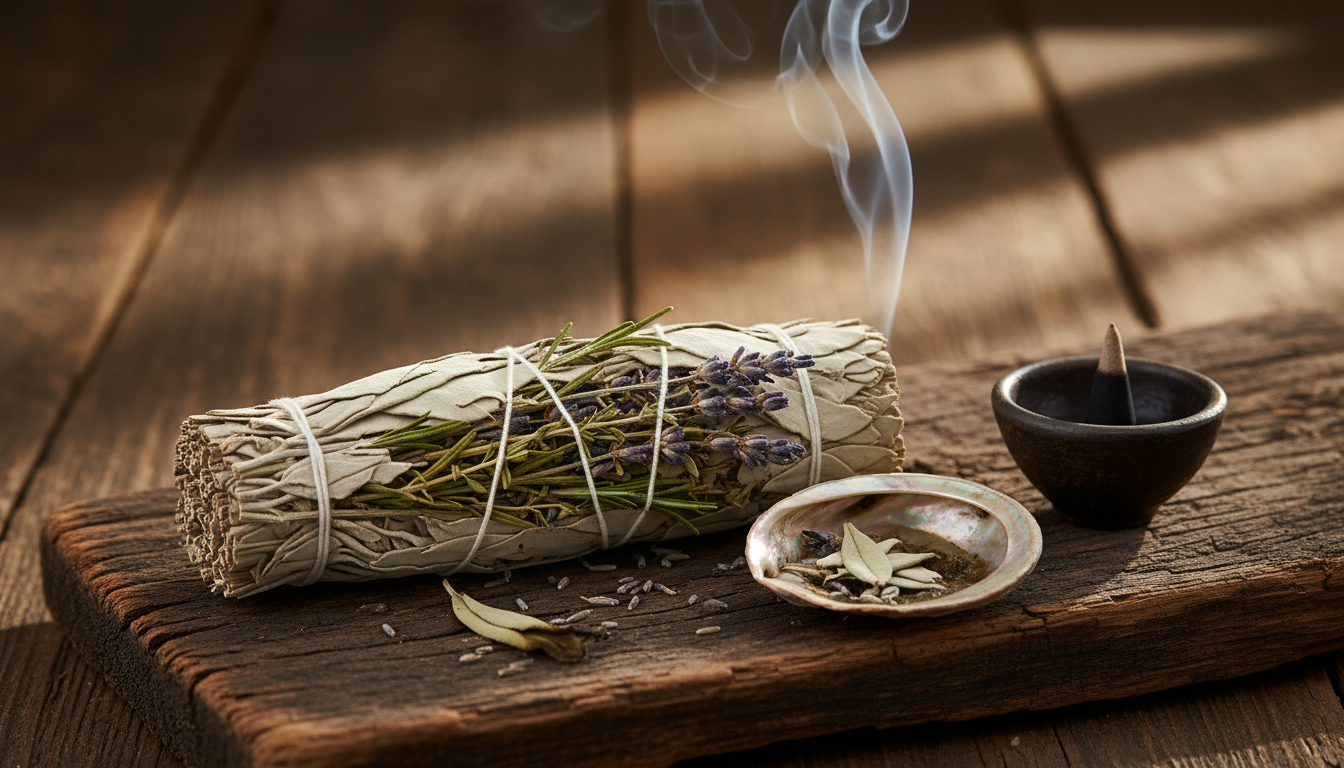
The History of White Sage
Ancient Origins
White sage (Salvia apiana) has been used by Indigenous peoples of North America for thousands of years, particularly by tribes in California, the Southwest, and Northern Mexico.
Sacred Ceremonies
Native American traditions use sage in purification rituals, sweat lodges, healing ceremonies, and to prepare sacred spaces. The smoke is believed to carry prayers to the spirit world.
Spiritual Cleansing
Burning sage, called "smudging," is used to cleanse negative energy, purify spaces, objects, and people. The practice has been passed down through generations.
Modern Usage
Today, smudging has spread globally as people seek to cleanse their homes, crystals, and energy fields. Ethical sourcing has become increasingly important.
The History of Palo Santo
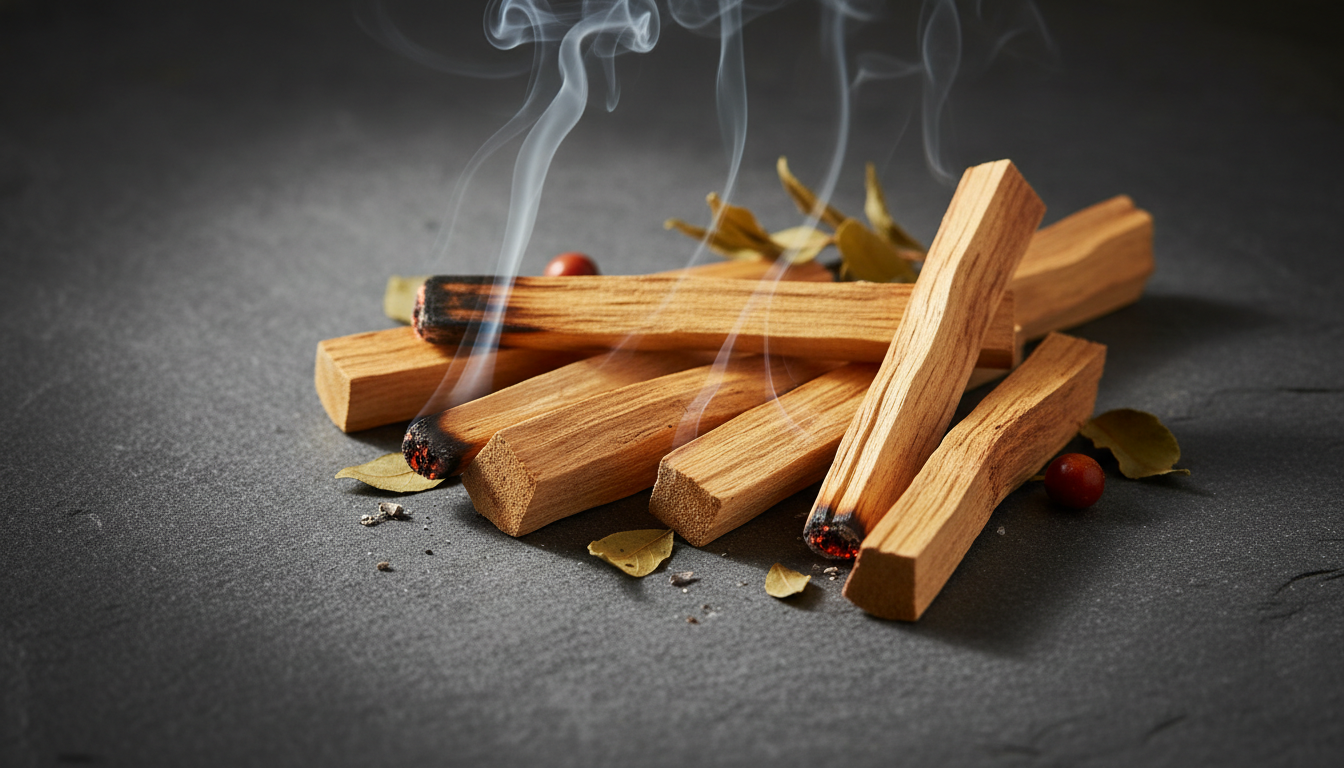
Palo Santo - "Holy Wood" from South America
Ancient Peru & Ecuador
Palo Santo (Bursera graveolens), meaning "holy wood" in Spanish, has been used by Indigenous Amazonian and Andean peoples for centuries in spiritual ceremonies.
Shamanic Traditions
South American shamans burn palo santo to clear negative energy, attract good fortune, and connect with the divine. It's considered a sacred tree.
Natural Medicine
Beyond spiritual uses, palo santo has been used traditionally to relieve stress, headaches, and inflammation. The oil is also used in aromatherapy.
Sustainability Focus
Authentic palo santo comes only from naturally fallen trees that have cured for 4-10 years. Living trees are protected, and ethical harvesting is essential.
Sage vs Palo Santo: Which Should You Use?
Both are powerful cleansers, but they work differently. Here's how to choose.
| Aspect | White Sage | Palo Santo |
|---|---|---|
| Scent | Earthy, herby, slightly bitter - a strong, distinctive smell | Sweet, woodsy, hints of citrus, pine, and mint - pleasant and uplifting |
| Energy | Powerful cleanser - removes ALL energy, including positive | Gentle cleanser - removes negative while preserving positive energy |
| Best For | Deep cleansing, moving into new spaces, clearing heavy energy | Daily maintenance, meditation, inviting creativity and love |
| Smoke | Dense, thick smoke that fills a room quickly | Light, delicate smoke that dissipates gently |
| Origin | Native to California and the American Southwest | Native to Peru, Ecuador, and Central America |
Pro Tip: Many practitioners use sage first for a deep cleanse, then follow with palo santo to invite positive energy back into the cleared space.
How to Smudge: Step-by-Step Guide
Whether you're cleansing crystals, your home, or yourself, follow these steps.
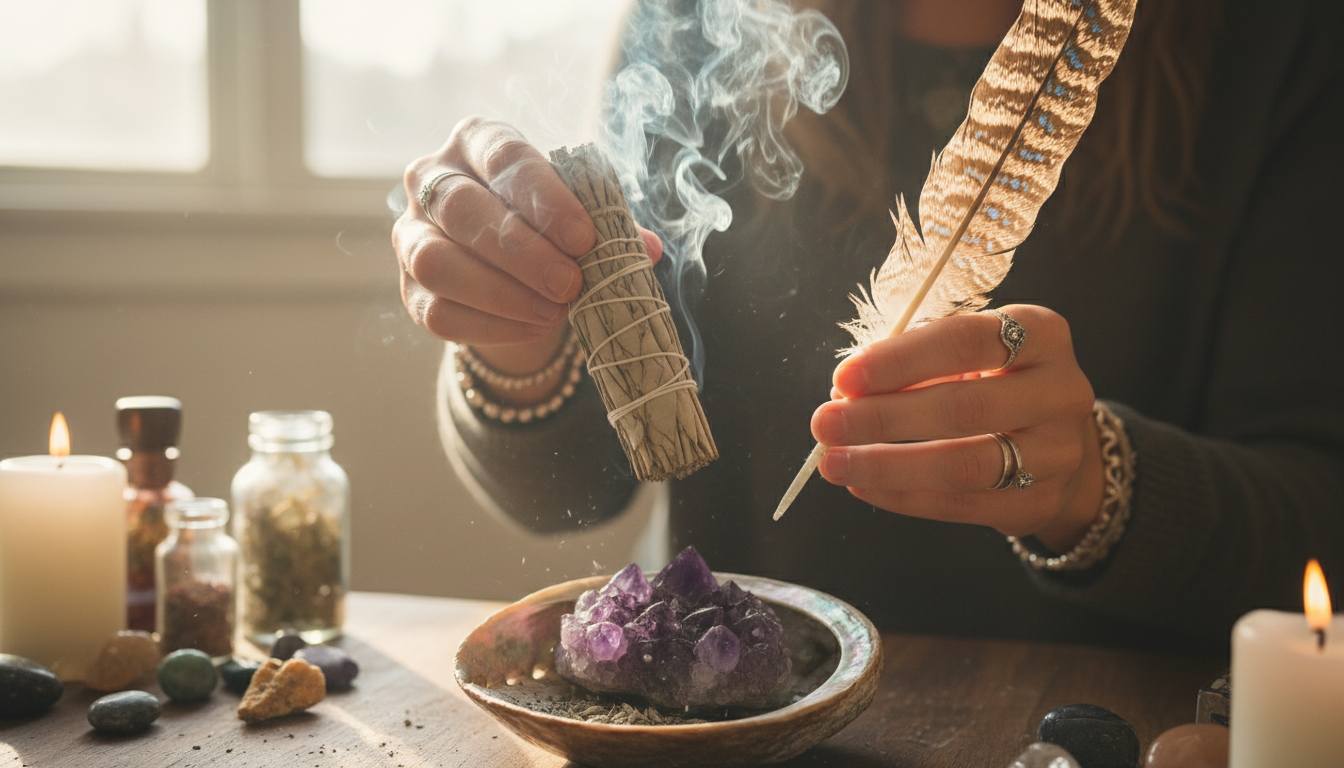
Step 1: Set Your Intention
Before lighting, take a moment to center yourself. Think about what you want to release or invite in. Your intention guides the energy.
Step 2: Light the Sage or Palo Santo
Hold the bundle at a 45-degree angle and light the tip. Let it burn for 20-30 seconds, then gently blow out the flame. The embers will continue to smoke.
Step 3: Waft the Smoke
Use your hand or a feather to direct the smoke around yourself, your crystals, or your space. Move clockwise for inviting energy, counterclockwise for releasing.
Step 4: Focus on Corners & Doorways
When cleansing a room, pay special attention to corners, doorways, and windows where stagnant energy can collect. Open a window to let negativity escape.
Step 5: Safely Extinguish
Press the burning end firmly into an abalone shell, ceramic dish, or sand. Ensure it's completely out before leaving it unattended.
When Should You Smudge?
There's no wrong time to smudge, but here are especially powerful moments.
Moving into a new home
Clear the previous occupants' energy and claim the space as your own
After arguments or illness
Release negative energy that may linger in your space
Before meditation or ritual
Create a sacred, cleansed space for spiritual work
When you feel stuck or heavy
Shift stagnant energy and invite fresh perspective
Cleansing new crystals
Clear any energy the crystals absorbed before reaching you
Full moon or new moon
Align with lunar cycles for amplified cleansing power
After guests leave
Reset your space to your own energy signature
Starting a new chapter
Symbolically release the old to welcome the new
Essential Smudging Supplies
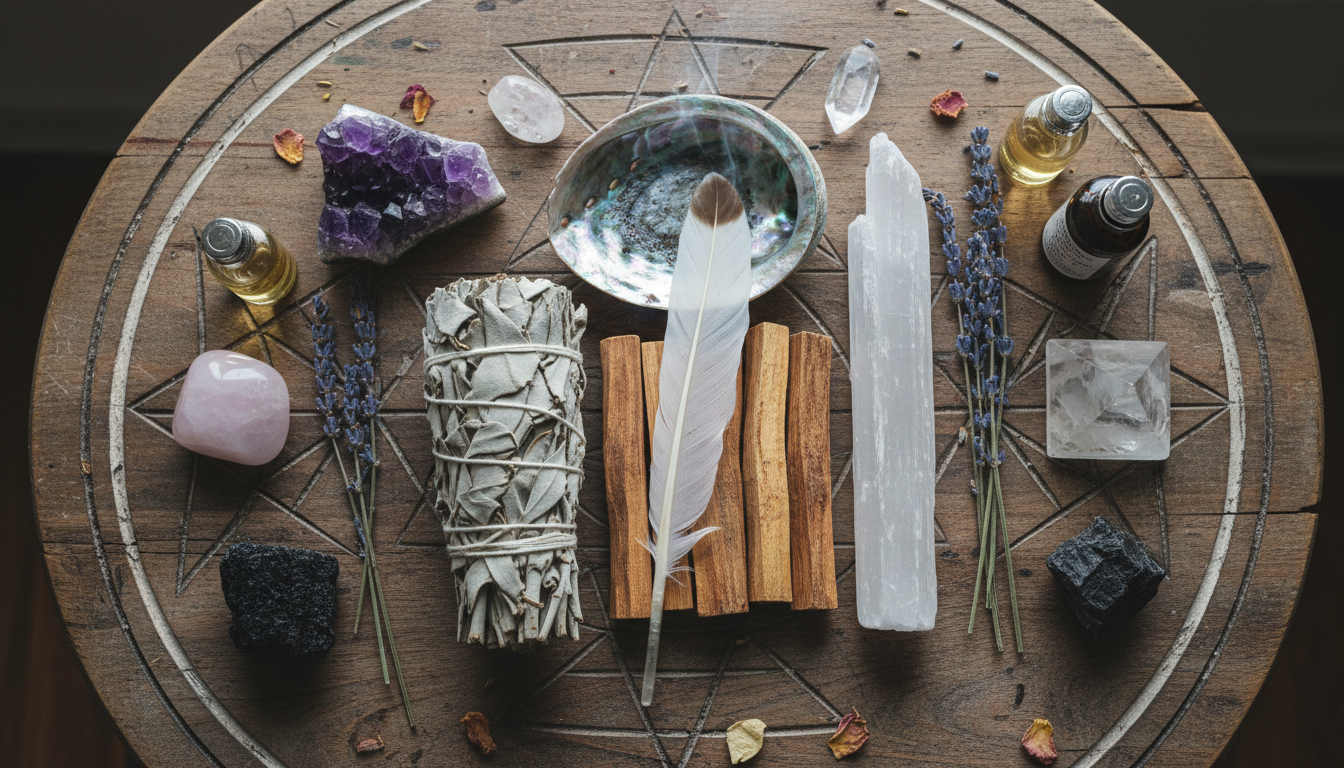
Sage or Palo Santo
Your cleansing tool - choose based on your intention
Abalone Shell
Traditional fire-safe container to catch ashes
Feather
Used to waft and direct the smoke
Matches or Lighter
Wooden matches add to the ritual feel
Safety Tips
Smudging involves fire and smoke. Please practice safely.
Never leave burning smudge unattended
Keep away from children, pets, and flammable materials
Use a fire-safe container to catch falling embers
Ensure proper ventilation - open a window
Those with respiratory issues should use caution
Pregnant women should consult a healthcare provider
Ethical Sourcing Matters
Honor the sacred nature of these plants by sourcing responsibly.
White Sage
- Wild sage populations are threatened by over-harvesting
- Buy from Native-owned businesses when possible
- Look for sustainably cultivated sage from farms
- Consider growing your own garden sage as an alternative
Palo Santo
- Only buy from suppliers who harvest fallen trees
- Trees must cure naturally for 4-10 years for aromatic oils to develop
- Living palo santo trees are protected by law in Peru
- Look for certifications or transparent sourcing information
Frequently Asked Questions
Common questions about sage, palo santo, and smudging.
Can sage or palo santo cleanse crystals?
Yes! Passing your crystals through sage or palo santo smoke is one of the safest and most effective ways to cleanse them. It works for all crystals, including those that can't be cleansed with water or sunlight.
How often should I smudge my home?
There's no set rule - trust your intuition. Many people smudge weekly, monthly on the full moon, or whenever the energy feels heavy or stagnant. After arguments, illness, or visitors are also good times.
What's the difference between white sage and garden sage?
White sage (Salvia apiana) is the traditional variety used in Native American ceremonies. Garden sage (Salvia officinalis) is culinary sage - it can also be burned but has a different energy and scent.
Why does my palo santo keep going out?
Palo santo burns slowly and often needs to be re-lit multiple times. This is normal! Let it burn for 30+ seconds before blowing out, and store it in a dry place.
Is it cultural appropriation to use sage?
This is a nuanced topic. You can honor the practice by learning its history, sourcing ethically, and approaching it with respect rather than treating it as a trend. Supporting Native-owned businesses helps.
Can I smudge myself?
Absolutely! Start at your feet and move the smoke upward around your body, ending at the top of your head. Visualize the smoke carrying away any negative energy.
Shop Sage, Palo Santo & Smudging Supplies
Visit our showroom inside Oakland Mall for ethically sourced sage, palo santo, abalone shells, and all the supplies you need for your smudging practice.
Call Us