Jade:
Stone of Serenity & Good Fortune
Revered for over 7,000 years across civilizations, Jade is the supreme stone of harmony, prosperity, and protection. Discover the difference between Nephrite and Jadeite, explore every jade color and variety, and learn why this ancient stone remains one of the most treasured crystals on Earth.
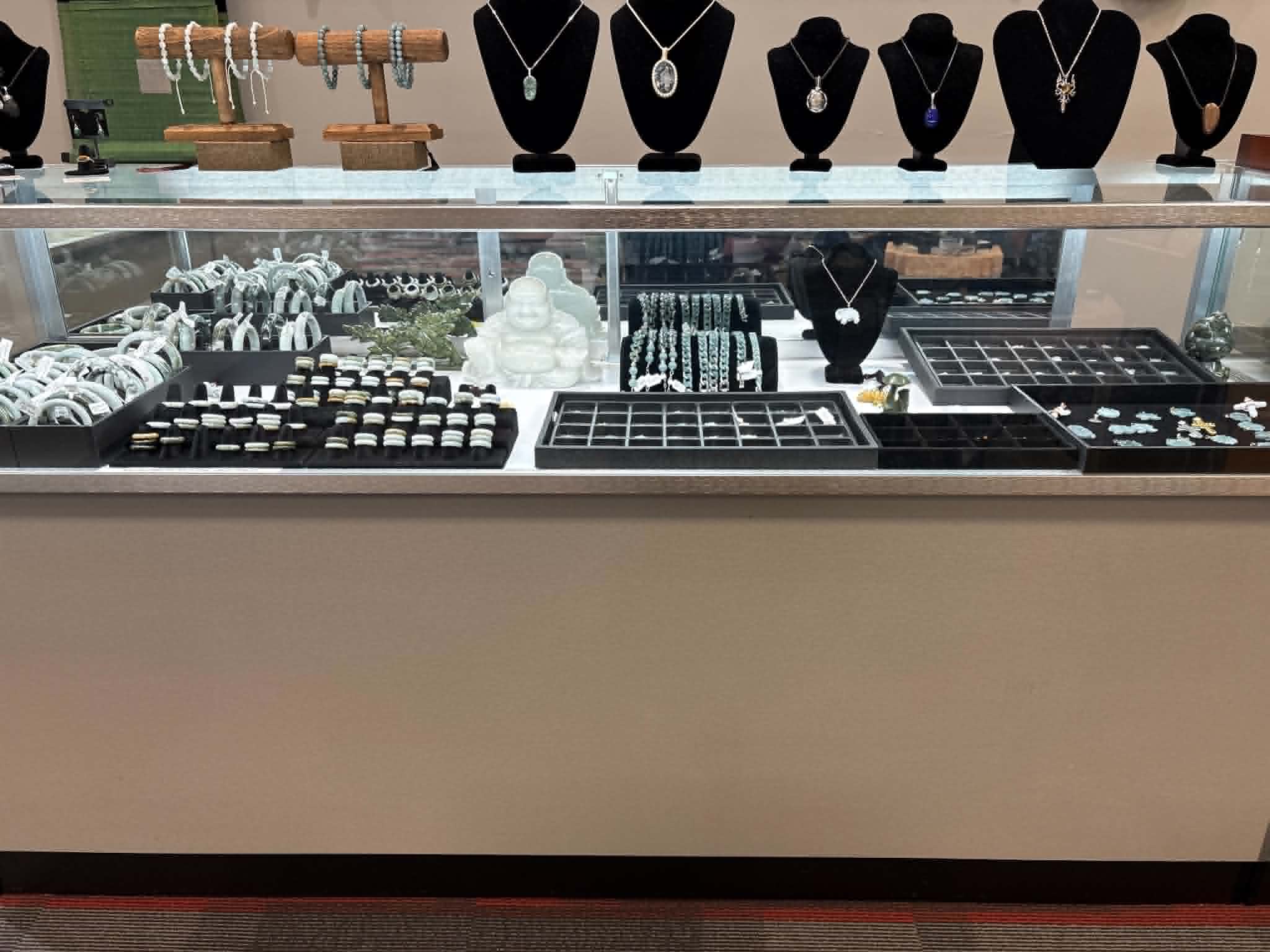
Jade collection featuring Nephrite and Jadeite varieties
What is Jade?
Jade is actually a name shared by two distinct minerals: Nephrite and Jadeite. Both are tough, beautiful, and have been treasured since prehistoric times, but they differ in chemistry, rarity, and value.
Known as the "Stone of Serenity", "Stone of Heaven", and "Stone of Eternal Youth", jade has been revered by Chinese, Māori, Mesoamerican, and many other cultures as the most precious of all stones — often valued more than gold. The Chinese character for jade (玉) represents beauty, nobility, and purity, and the phrase "gold has a price; jade is priceless" reveals its supreme status in Eastern culture.
Nephrite vs Jadeite
Understanding the two types of jade is essential for collectors, healers, and anyone shopping for authentic jade.
Nephrite Jade
The Classic Jade
The more common of the two true jades. Nephrite has a creamy, waxy texture and comes in shades of green, white, brown, and black. It is extremely tough — actually tougher than steel — due to its interlocking fibrous crystal structure.
Jadeite
The Precious Jade
The rarer and more valuable of the two jade minerals. Jadeite has a vitreous (glassy) luster and comes in a wider range of colors including the prized Imperial Green, lavender, white, yellow, orange, and black.
Jade comes in a stunning range of colors — each with unique meanings and properties
Jade Healing Properties
Mental & Emotional
- • Promotes inner peace and calm
- • Releases negative thought patterns
- • Encourages self-sufficiency
- • Stabilizes emotional balance
- • Attracts good luck and friendship
Spiritual
- • Opens and heals the Heart chakra
- • Protects from spiritual harm
- • Enhances dream recall
- • Connects to ancestors and wisdom
- • Represents the five virtues
Physical
- • Supports kidney and bladder health
- • Aids body detoxification
- • Promotes longevity and vitality
- • Strengthens the immune system
- • Balances body fluids and filtration
Jade Colors & Their Meanings
Jade comes in a wide spectrum of colors. Each color carries its own energy, symbolism, and metaphysical properties.
Imperial Green
Extremely RareThe most valuable jade. Vivid emerald green with high translucency. Represents royalty, wealth, and supreme harmony.
Green (Medium)
CommonClassic jade green. Represents growth, healing, nature, and the heart chakra. The most recognized jade color.
White (Mutton Fat)
RareHighly prized nephrite variety with creamy white appearance. Symbolizes purity, clarity, and spiritual perfection.
Lavender
RareDelicate purple-pink jadeite. Associated with spiritual awareness, emotional healing, and the crown chakra.
Black
UncommonDeep black nephrite or jadeite. Powerful protection stone, grounding energy, and warding off negativity.
Yellow/Honey
UncommonWarm golden jade. Connected to the solar plexus chakra, optimism, joy, and welcoming positive energy.
Jade in Chinese Culture & History
No stone holds a more important place in Chinese culture than jade. For over 7,000 years, jade has been the ultimate symbol of virtue, power, and immortality. The Chinese word for jade (玉, yù) is one of the oldest characters in the language, and Confucius himself equated jade with 11 virtues including benevolence, wisdom, and courage.
Imperial jade was reserved exclusively for the Emperor. The famous jade burial suits of the Han Dynasty — comprising thousands of jade pieces sewn with gold wire — were believed to preserve the body for eternity. Today, jade bangles are passed from mother to daughter as heirlooms, and jade is given at births, weddings, and business openings as a symbol of good fortune.
The Five Virtues of Jade
- 仁 Benevolence — its warm, smooth texture
- 義 Righteousness — its translucent purity
- 智 Wisdom — its pure, clear tone when struck
- 勇 Courage — it can be broken but not bent
- 潔 Purity — its sharp edges do not cut
Cultural Symbolism
- • Jade bangles protect the wearer from harm
- • A jade pendant brings good luck and prosperity
- • Jade placed in the mouth of the deceased ensures immortality
- • "Gold has a price; jade is priceless" (Chinese proverb)
- • Gifting jade expresses deep love and respect
Where Jade Comes From
Each origin produces jade with distinct characteristics, colors, and cultural significance.
Myanmar (Burma)
The world's primary source of gem-quality jadeite. Burmese jade, particularly from the Kachin State mines, produces the finest Imperial Green jadeite — the most valuable jade in existence.
China
The historic heartland of jade culture for 7,000+ years. Chinese deposits are primarily nephrite, especially the prized "mutton fat" white nephrite from Hotan (Xinjiang) and the dark green "spinach jade" from other regions.
Canada (British Columbia)
One of the largest nephrite jade deposits in the world. Canadian jade is known for its deep, rich greens and is commercially important in the global market.
New Zealand
Sacred pounamu (greenstone) is deeply important to Māori culture. New Zealand nephrite ranges from deep green to translucent pale varieties and is protected by law.
Guatemala
The only significant source of jadeite in the Americas. Mesoamerican civilizations, including the Maya and Olmec, valued jade even more than gold.
How to Identify Real Jade
Many stones are sold as "jade" that are not — serpentine, aventurine, chrysoprase, and dyed glass are common imitations. Here's how to tell if your jade is real:
Weight Test
Real jade is dense and heavy. Toss it gently — it should feel heavier than it looks. Fake jade (glass, resin) feels lighter.
Temperature Test
Real jade feels cool to the touch and stays cool even when held. It takes longer to warm up than glass or plastic imitations.
Scratch Test
Real jade (6-7 Mohs) cannot be scratched by a steel knife. If a knife leaves a mark, it's likely serpentine or another softer stone.
Light Test
Hold jade up to light. Real jade may show some translucency with natural fibrous patterns. Fake jade often has bubbles or appears perfectly uniform.
Color Test
Real jade has natural color variations and may show lighter and darker zones. Dyed jade shows color concentrated in cracks and surface pits.
Sound Test
Tap two pieces of jade together — real jade produces a resonant, bell-like chime. Fake jade sounds dull or plastic-like.
How to Use Jade
For Abundance & Luck
- 1Place jade near your front door or cash register to invite prosperity
- 2Carry a jade tumbled stone in your wallet or purse
- 3Wear a jade bracelet on your receiving (left) hand
- 4Place jade in the southeast corner of your home (wealth area in Feng Shui)
For Protection & Healing
- 1Wear a jade pendant over your heart chakra for emotional healing
- 2Meditate holding jade to release negative emotions and find peace
- 3Place black jade near your bed for protection during sleep
- 4Use jade rollers on your face for skin health and energy flow
Jade Jewelry Guide
Discover the rich tradition and meaning behind jade jewelry — from sacred Chinese bangles to modern pendant designs. Learn how to choose, wear, and care for jade jewelry.
- Jade bangles, rings, pendants & earrings
- How to spot fake jade jewelry
- Cultural significance of jade bangles
Jade Care Tips
Jade is durable but should be stored separately to avoid scratching softer stones. Clean with warm soapy water and a soft cloth. Avoid ultrasonic cleaners for treated jade. Nephrite can handle gentle water cleansing. Keep jade away from extreme heat to prevent damage. The more you wear jade, the more it develops a beautiful luster from skin oils.
Find Your Perfect Jade
From tumbled nephrite to polished jadeite jewelry, explore our curated collection of authentic jade sourced from trusted mines around the world.